




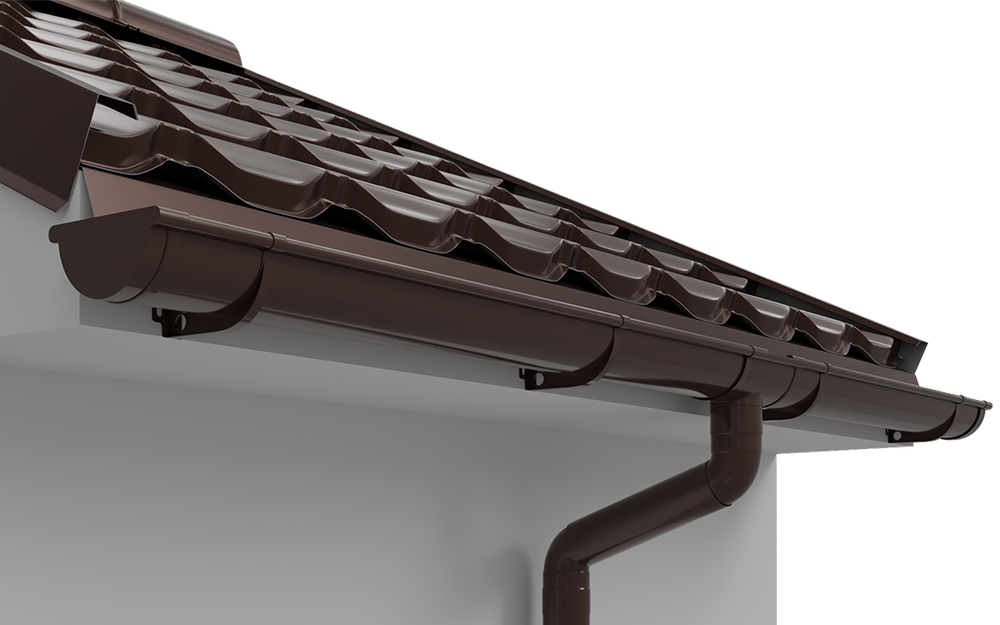
Why your home needs gutters — and what happens without them
Rain is not your home’s enemy. Poorly directed water is! Without a functional gutter and downpipe system, rainwater flows freely from the roof and reaches the wooden elements of the roof structure and the façade. The visible result: damp stains and damaged plaster.
A properly installed PVC gutter system solves this problem simply, quickly and at an affordable cost — even if you choose to install it yourself without a specialised team. The SMART PVC 120/80 system has been designed precisely for this scenario.
What exactly is a PVC gutter system?
A gutter system is the complete assembly of components that collects rainwater from the edge of the roof and directs it safely to the ground or directly into the drainage network. Unlike metal systems, PVC components are lighter, easier to cut and assemble, and do not require special installation tools or techniques.
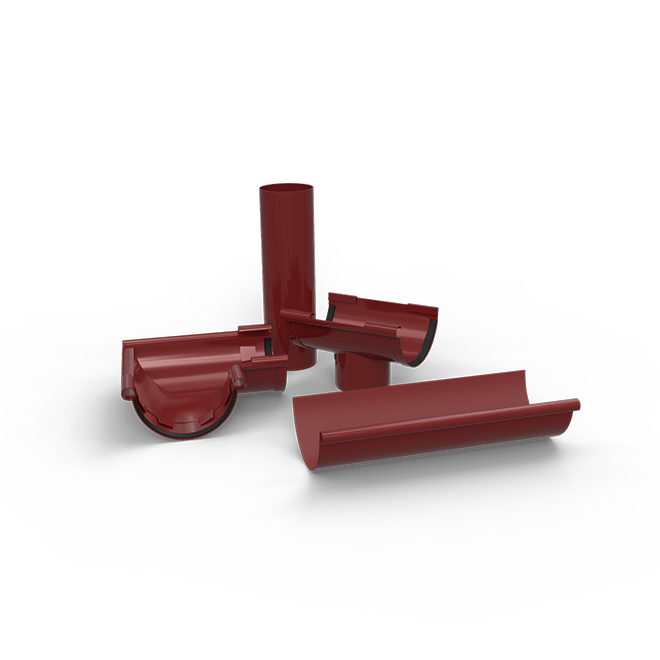
The SMART 120/80 system — with a 120 mm gutter and an 80 mm downpipe — is designed for detached houses, garages, household annexes and any utility building where fast installation and a controlled budget are priorities. All connecting elements are fitted with integrated sealing gaskets, which means that you can achieve a leak-free installation even if you have never installed gutters before.
What components does a complete system include?
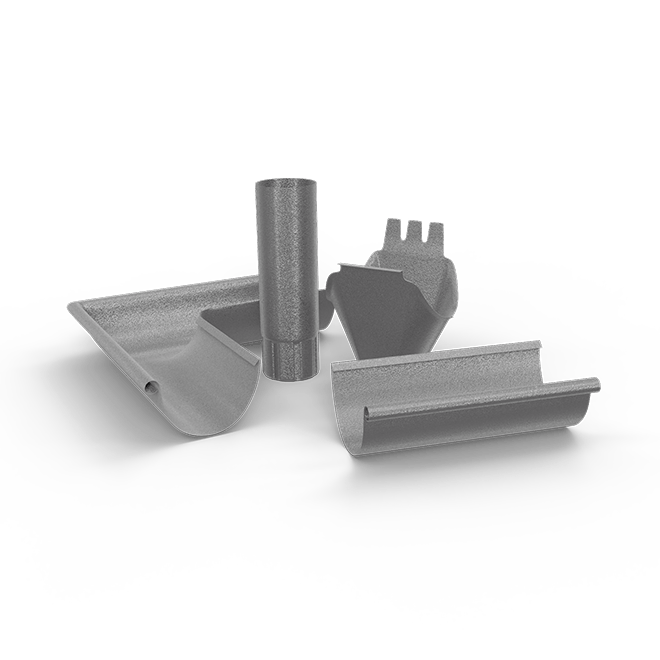
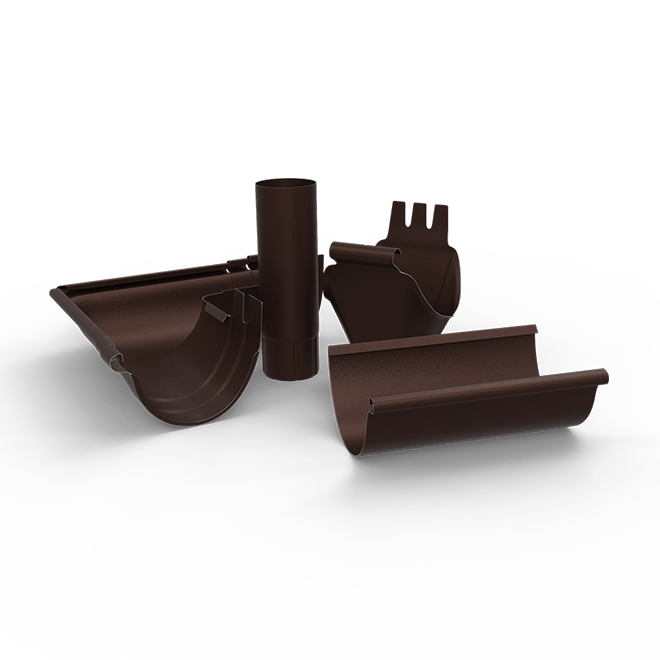
A functional system does not consist only of the gutter itself. There are three categories of components, each with a clearly defined role. The first category covers the collection and horizontal transportation of water: the gutters themselves, the end caps that close them, internal and external corners for changes in the roof direction, and the brackets used to secure the gutter to the rafters.
The second category provides the transition to vertical drainage: the gutter-to-downpipe outlet — the key component connecting the horizontal and vertical sections — downpipe bends that allow changes of direction, and the downpipes themselves, secured to the wall with clamps. The final category manages the discharge of water: the bend at the bottom of the downpipe directs water away from the foundation, while the Y-branch allows two downpipes to be connected.
Practical tip: before ordering the components, draw a simple plan of the roof — note the lengths, the number of corners and the position of the downpipes. You will know exactly how many components you need and avoid additional trips to the store.
PVC or metal? How to make the right choice
This is the question asked by most people who are renovating or building a property. The honest answer is that both solutions work — but in different situations. Metal systems are more durable and more resistant to heavy loads, but they involve higher costs and more complex installation. PVC systems are more affordable, lighter and much easier to install, but they are better suited to medium-sized buildings in areas without heavy rainfall and to coastal areas, where salt causes metal to corrode quickly.
Choose the SMART PVC 120/80 system if you plan to install it yourself, if budget is a priority, if you are working on a garage, holiday home or annex, or if you want to complete the project over a weekend. Choose a metal system if you have a large house with a complex roof, if your area frequently experiences torrential rain or heavy snowfall, or if the installation will be carried out by a specialised team that can fully take advantage of the characteristics of a metal system.
How to install a PVC system — step by step
The installation process is not complicated, but the order of the steps matters. Before doing anything else, plan the project: measure the perimeter of the roof, identify where the downpipes will be positioned — usually at the ends of the gutter or every 10 metres — and calculate the required slope.
The first practical step is to install the gutter brackets, which are secured to the rafter or batten before the gutter is fitted. The slope rule is simple: a height difference of 5 mm for every linear metre, allowing the water to flow naturally towards the downpipe outlet without stagnating. Once the brackets have been installed, the gutter clips into them — if it needs to be cut, an ordinary handsaw will work perfectly.
Next, install the corner pieces where the direction changes and the end caps at the ends of the gutter. The gutter-to-downpipe outlet must be installed at the lowest point of the gutter — this is where all the water needs to reach. The downpipe is secured to the wall with clamps at intervals of no more than 1.5–2 metres; wider spacing causes vibrations that can weaken the connections over time. At the bottom of the downpipe, install the discharge bend so that the water is directed at least 30–50 cm away from the foundation.
Common mistakes and how to avoid them
The most common mistake is installing the gutter without a slope or with the slope running in the wrong direction. Standing water encourages deposits and moss growth, and over time the connections can fail. Check the slope with a simple spirit level before securing all the brackets — this will save you considerable time later. The second common mistake is using too few downpipe clamps: when installed too far apart, they allow the downpipe to move in the wind and weaken the connections. The third problem occurs when the gutter-to-downpipe outlet is not installed at the lowest point of the gutter — some of the water will not reach the downpipe and will overflow at the end.
How durable is a PVC rainwater system and how should it be maintained?
A correctly installed PVC system that is cleaned regularly — at least once a year, in autumn after the leaves have fallen — can operate without problems for 15–25 years. The main factors that reduce its service life are the accumulation of leaves, which causes pressure and standing water, prolonged exposure to sunlight without UV protection, which makes the material brittle, and improper fixing, which allows constant movement and vibration. A quick visual inspection every spring is enough to identify potential problems at an early stage.
Conclusion
If you have a house, garage or annex and want a rainwater drainage system that you can install yourself quickly and without unnecessary complications, the SMART PVC 120/80 system is the logical choice. The integrated gaskets eliminate the need for additional sealants, the components are lightweight and easy to cut, and the complete system can accommodate any configuration — from simple single-slope buildings to roofs with multiple slopes and several downpipes.
Discover the complete SMART PVC 120/80 system and calculate which components you need for your project.