
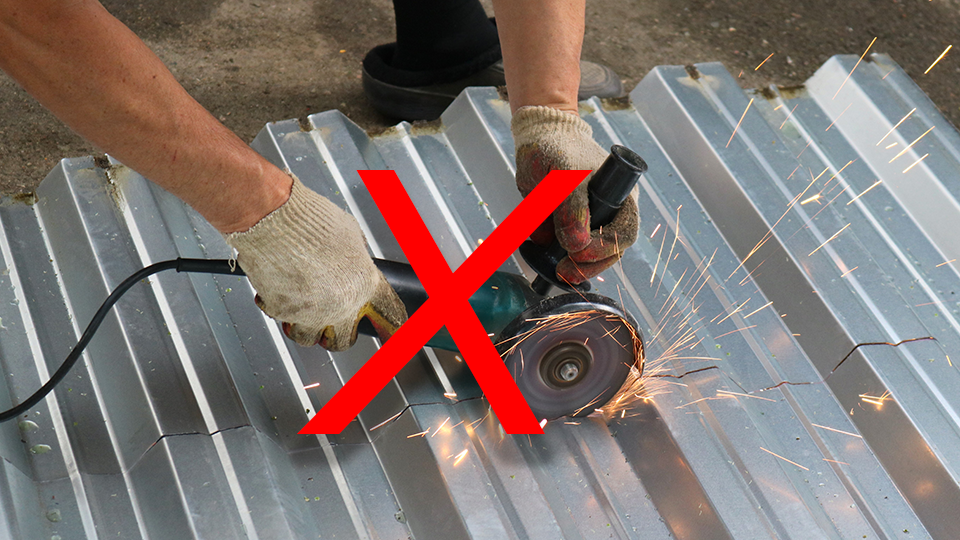
Cutting roofing sheet metal with an angle grinder can lead to corrosion and loss of warranty. Find out why it is prohibited and which tools are recommended for proper installation.
Angle grinder and metal roofing: a combination that can be costly
During the installation of a metal roof, cutting the panels is unavoidable. The material must be adjusted around valleys, ridges, eaves, dormers, or other structural details. However, the method chosen for cutting can directly influence the long-term behavior of the sheet metal.
Many installers or property owners choose the angle grinder because it is fast and easy to use. At first glance, it seems like a practical solution. In reality, however, this method can seriously damage the protective layers of the sheet metal and can lead to corrosion.
For this reason, under the conditions of most manufacturers, the use of an angle grinder is prohibited and may lead to the loss of the product warranty.
What happens when you cut sheet metal with an angle grinder?
An angle grinder works at high speed and cuts metal through friction. This process generates very high temperatures in the area where the disc comes into contact with the material.
During cutting, several unwanted effects occur:
- the cut edge overheats excessively
- incandescent metal sparks appear
- fine particles of molten metal are released
- local damage to the protective layers occurs
These temperatures and particles directly affect roofing sheet metal.
Why are the protective layers affected?
A sheet metal roof is not made only of steel. To withstand over time, the material includes several layers that work together:
- steel core
- zinc or aluzinc coating
- passivation layer
- primer
- final decorative paint layer
When sheet metal is cut with an angle grinder, the heat generated can affect these layers, especially near the edge.
The consequences may include:
- local burning of the paint layer
- damage to the primer
- damage to the zinc layer
- reduced anti-corrosion protection in the cut area
In other words, the resulting edge no longer has the same level of protection as an edge obtained by mechanical cutting.
The spark problem: damage beyond the cut edge
One of the biggest problems is not only the area actually being cut, but also what happens around it.
The sparks produced during cutting with an angle grinder are very hot metal particles that settle on the sheet metal surface and can:
- locally perforate the paint
- damage the protective coating
- create small corrosion spots
- cause rust stains after installation
For this reason, rust marks may appear over time on a metal roof cut with an angle grinder, apparently „without explanation”. In reality, they are caused by the incandescent particles projected during cutting.
Why is this issue not covered by the warranty?
To benefit from the warranty, installation must be carried out according to the manufacturer’s instructions and with the recommended tools.
If the sheet metal is cut with an angle grinder, the corrosion that appears later is considered an installation error, not a product defect. The manufacturer can no longer guarantee the performance of the material in an area where the protective layers have been compromised by high temperature.
This means that:
- the claim will be rejected
- the warranty will become void
- repair costs will remain the responsibility of the owner or installer
That is why choosing the right tools is not a minor detail, but an important condition for the durability and warranty retention of the roof.
What are the correct cutting alternatives?
For the proper cutting of roofing sheet metal, tools are recommended that cut cold, without generating high temperatures and without producing sparks.
The most suitable solutions are:
- electric sheet metal shears
- professional manual shears
- special sheet metal guillotines
These tools cut by mechanical shearing and keep the protective layers of the material intact.
The advantages of mechanical cutting are clear:
- the zinc is not thermally affected
- the paint is not burned
- the edge remains better protected
- no incandescent particles appear on the panel surface
A small detail with a major impact on roof durability
At first glance, the cutting method may seem like a secondary detail. In practice, however, it is precisely these details that make the difference between a durable metal roof and one prone to problems.
If one of the protective layers is compromised, the long-term resistance of the system decreases. And the effects do not always appear immediately. Very often, corrosion begins locally and becomes visible over time.
That is why proper cutting is not just a technical recommendation, but a basic condition for professional installation.
Common mistakes on site
On construction sites, the use of an angle grinder usually appears for reasons of speed or convenience. However, this choice can generate much higher costs later.
The most common mistakes are:
- cutting panels directly on the roof with an angle grinder
- allowing sparks to settle on the panel surface
- using unsuitable abrasive discs
- ignoring the manufacturer’s instructions
These practices can lead to premature rust, loss of warranty, and costly repairs.
Conclusion
Not all savings are worthwhile. An angle grinder may seem like a quick solution, but using it to cut roofing sheet metal compromises the protective layer and accelerates corrosion.
An installation carried out with unsuitable tools can lead to:
- premature rust
- loss of warranty
- additional repair costs
That is why, for a durable metal roof, cutting should only be carried out with recommended tools, such as sheet metal shears or special guillotines.
Choose installers who follow installation rules and use the right tools. A good roof depends not only on the material, but also on how it is installed.