
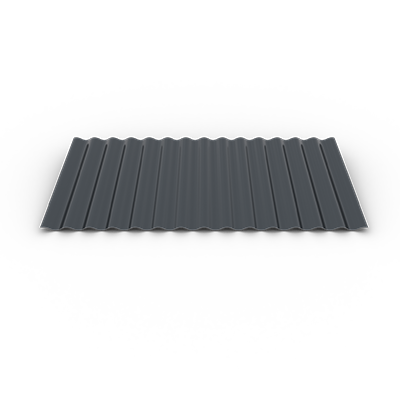
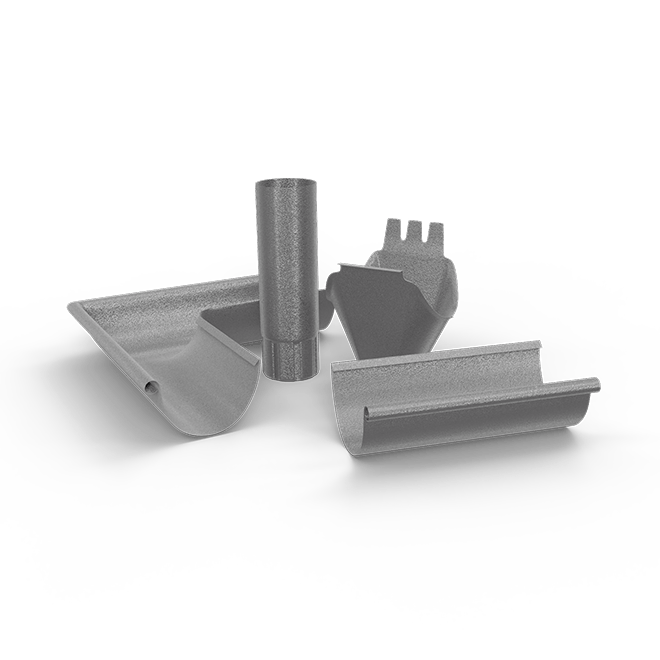
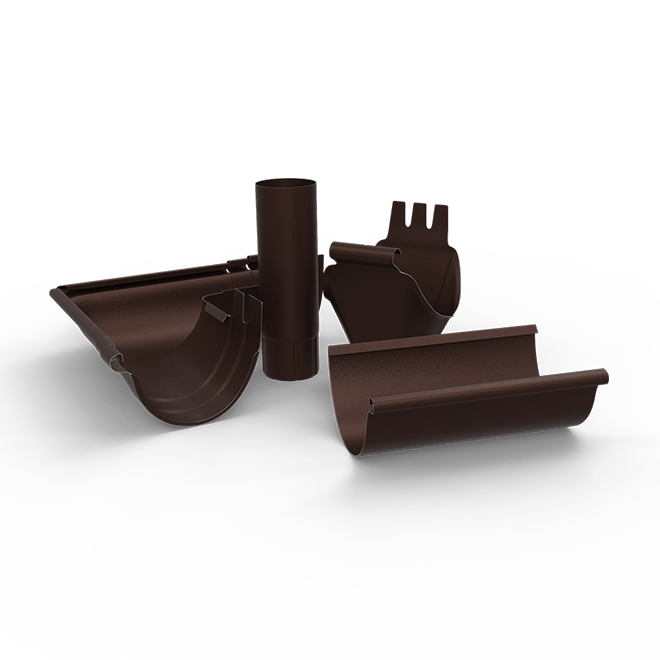
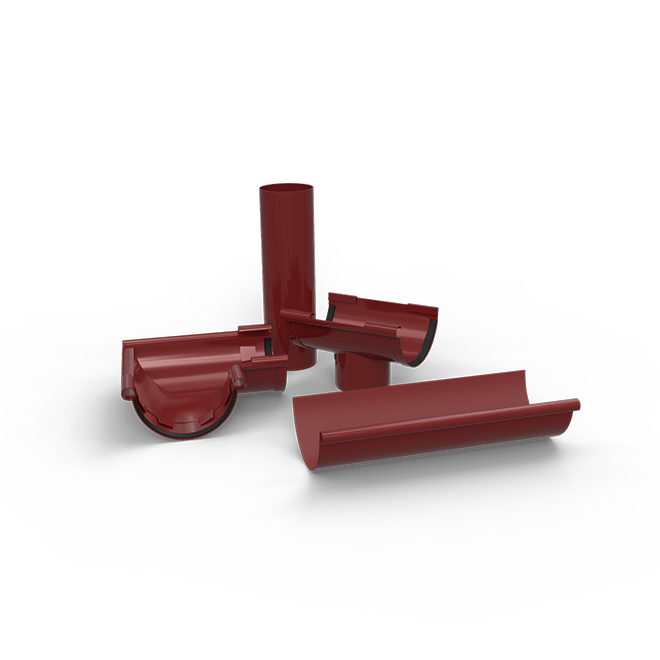


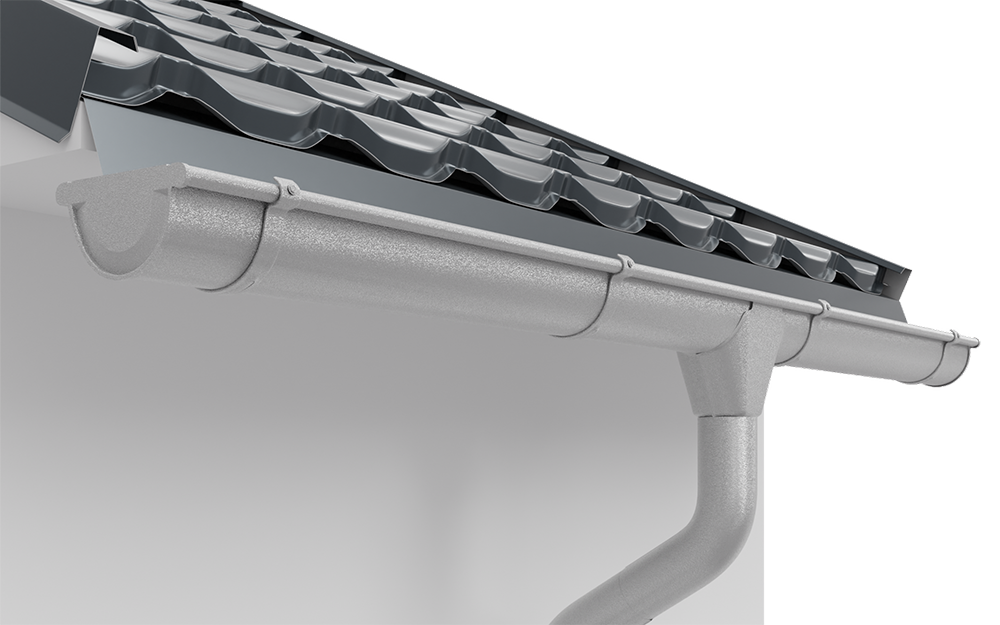
When choosing gutters and downpipes, it is easy to focus on their shape. However, the material they are made from is what determines how long they will last — and how often they will need to be replaced.
The two most common options on the market are galvanized steel gutters and alu-zinc coated steel gutters. Both are made of steel and both may look similar at first glance. The difference lies in the protective coating applied to the surface of the metal. And this difference matters greatly in the long term.
Short answer: which one is better?
Alu-zinc coated steel generally offers a longer service life than zinc-coated steel under similar exposure conditions. If long-term durability is your priority, especially in areas with frequent rainfall or a large amount of foliage, alu-zinc is the safer choice.
What is galvanized steel and how does it protect?
Galvanized steel is steel coated with a layer of zinc. This protects the steel against rust through an interesting mechanism: if the surface is scratched or cut, the zinc corrodes before the steel, sacrificing itself to protect the metal underneath. This is why zinc is referred to as a "sacrificial metal".
The disadvantage is that this protective layer is gradually consumed over time due to constant exposure to rainwater, air and atmospheric contaminants. Once the zinc layer has completely disappeared, the steel remains exposed — and rust can develop quickly.
Gutters made from unpainted zinc-coated steel have an estimated service life of 10–20 years under normal conditions, with an average of approximately 15 years.
What is alu-zinc coated steel and why does it last longer?
Alu-zinc is also steel sheet, but its protective coating is a mixture of aluminium and zinc — rather than pure zinc. The typical composition is:
- ~55% aluminium
- ~43% zinc
- a small amount of silicon
Aluminium forms a stable and compact layer on the metal surface, preventing direct contact between the steel and water or air. At the same time, the zinc in the coating continues to provide protection in cut or scratched areas. The combination of these two metals provides greater corrosion resistance than zinc alone.
Gutters made from unpainted alu-zinc coated steel can last 20–35 years, with an average of approximately 25–30 years — significantly longer than conventional galvanized steel.
Why do gutters wear out faster than the roof?
It may seem surprising, but gutters and downpipes are usually among the first roof elements that need to be replaced — even when they are made from the same material as the roof covering.
The reason is that the conditions in which they operate are much more demanding. Unlike the roof surface, where water runs off quickly, gutters can accumulate:
- standing water after rainfall
- leaves and organic debris that retain moisture
- contaminants carried by wind and rain
- moss and biological deposits
All of these factors accelerate corrosion inside the gutter. Regular gutter cleaning — at least once a year, preferably in autumn — can significantly extend the service life of the system, regardless of the material selected.
Summary: zinc vs. alu-zinc in numbers
Galvanized steel: estimated service life 10–20 years | average ~15 years
Alu-zinc coated steel: estimated service life 20–35 years | average ~25–30 years
In practice, an alu-zinc system can last almost twice as long as a galvanized one under similar conditions.
Which one should you choose?
If the initial budget is the main consideration and replacing the gutters after 10–15 years is not a problem, galvanized steel can be an acceptable choice.
If you want to invest once and avoid worrying about your gutters for a long time, alu-zinc is the more economical choice in the long term — even if its initial price may be slightly higher.
In addition, for homes located in areas with nearby trees, frequent rainfall or where gutters cannot be cleaned regularly, the additional resistance offered by alu-zinc can make a real difference.
Practical advice for homeowners
Regardless of the material selected — zinc or alu-zinc — the most important thing you can do to extend the life of your gutters is to remove leaves and dirt at least once a year, preferably in autumn. Standing water and organic deposits are the main factors that accelerate internal corrosion.
Conclusion
Both galvanized steel and alu-zinc coated steel are suitable materials for gutters and downpipes. The difference lies in how each material protects the steel and how long that protection lasts.
Alu-zinc coated steel — thanks to its aluminium and zinc composition — creates a more stable and corrosion-resistant barrier. In the long term, this results in a rainwater drainage system that requires less maintenance and fewer replacements.